
AGICO supplies an NFC coconut water processing line that connects washing and extraction with filtration, heat treatment, and filling. The line can process water from young green coconuts or mature brown coconuts, with equipment selected around the raw material, desired clarity, packaging format, and distribution conditions.
For beverage producers and coconut processors, the main configuration choice is between a pasteurized product distributed under refrigeration and a UHT-treated product with aseptic packaging for ambient distribution. NFC (not from concentrate) coconut water can be produced in either route when no concentration and reconstitution step is used. The selected separation and filtration stages control the degree of clarification.
Get a Coconut Water Line Configuration
NFC Coconut Water Processing Line Configurations
A coconut water processing plant should be designed around the finished product and its route to market. Raw coconut quality, holding time after extraction, filtration intensity, and packaging must be considered together when selecting the equipment.
Pasteurized Coconut Water for Chilled Distribution
This route combines extraction and filtration with pasteurization, cooling, and suitable hygienic filling. It is intended for products maintained in a cold chain. The heat treatment and storage conditions are established for the particular product; a pasteurized process should not be treated as equivalent to an ambient aseptic process.
UHT Coconut Water with Aseptic Filling
For ambient distribution, the line combines UHT treatment with an aseptic filling system and compatible packaging. Heating, holding, cooling, and downstream hygiene form one coordinated process. The finished product’s shelf life depends on the validated treatment, packaging integrity, raw material quality, and storage conditions, rather than on clarity alone.
Optional Coconut Water Concentration Processing Line
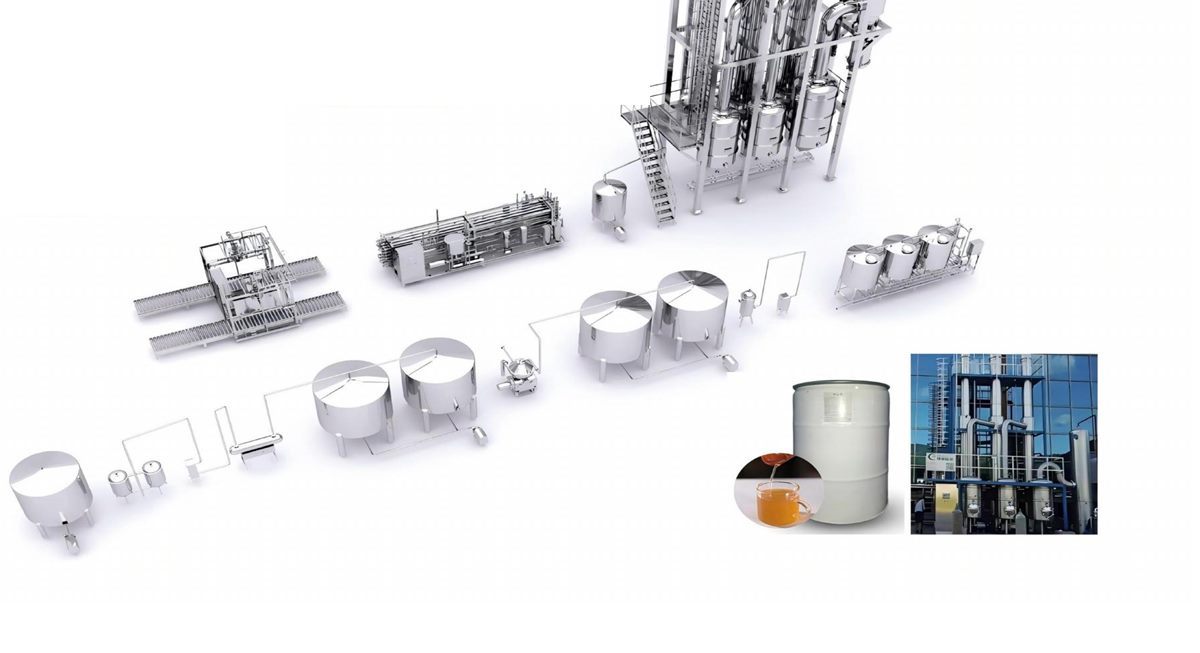
Concentrated coconut water requires a separate process route rather than an added step in the standard NFC line. The route can include coconut water collection, duplex filtration, cooling, stirring, centrifuging, chilled holding, optional ultrafiltration, preheating, concentration, storage, and filling. The evaporation system and filling configuration are selected for the target concentration, package, and production capacity.
Discuss Your Coconut Water Processing Route
Coconut Water Processing Equipment and Flow
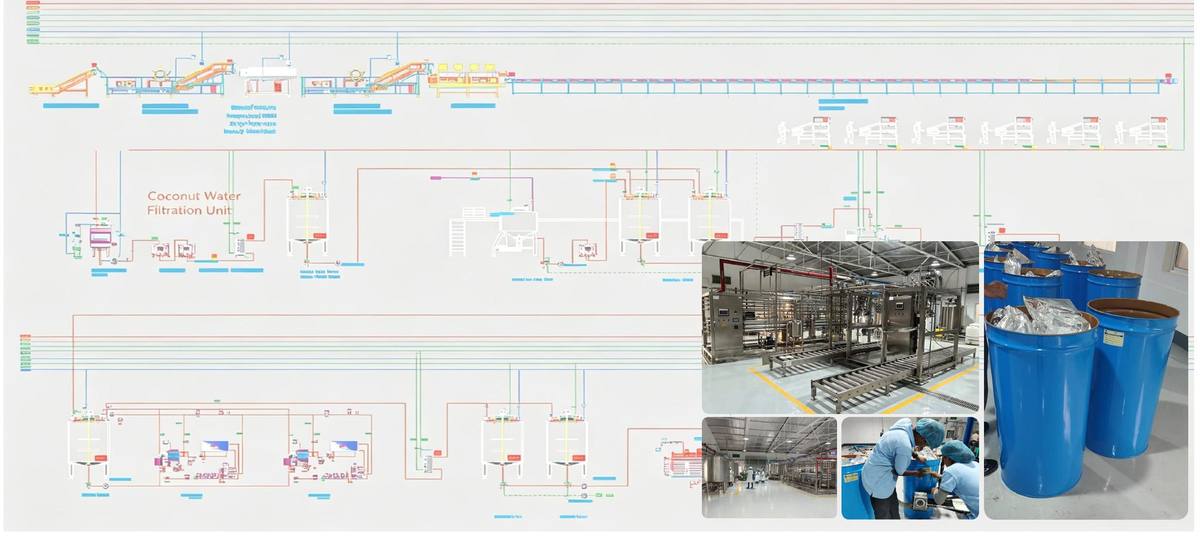
The coconut water production line follows a connected sequence: receiving and washing → cutting and collection → filtration and clarification → heat treatment → filling. The clarification level and thermal route are selected to suit the finished product. Washing, extraction, and water collection must be coordinated with downstream liquid handling to avoid unnecessary holding.
Get a Process Flow and Equipment List
1. Coconut Washing, Cutting, and Water Collection
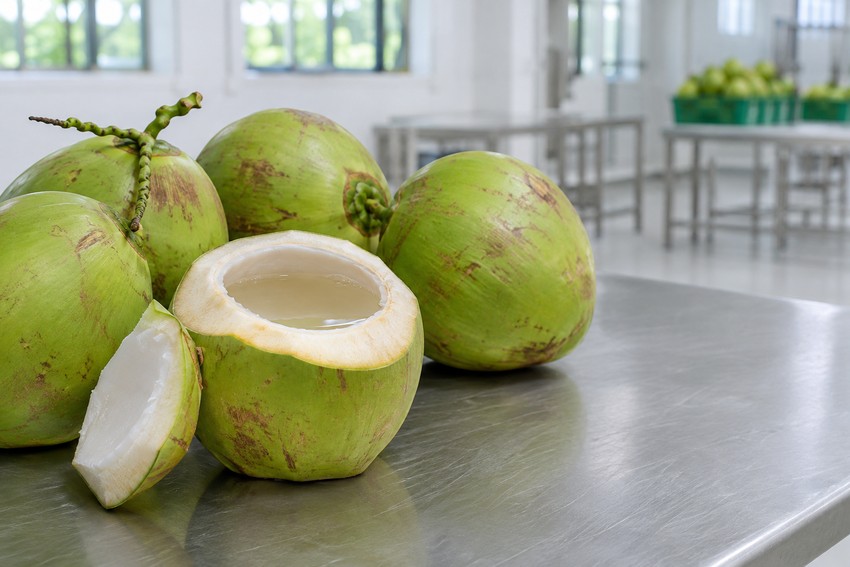
Coconuts are received, sorted, and cleaned using spray and bubble washing stages to remove surface dirt before opening. Conveyors and elevators connect these operations. An automatic coconut cutting machine opens the coconuts, allowing the water to drain into a hygienic collection system while the halves move to subsequent handling.
Collection tanks and transfer piping should support prompt processing and controlled handling. Stainless steel provides a cleanable contact surface; limiting air exposure and unnecessary holding helps manage oxidation. The receiving and cutting arrangement is matched to coconut size, maturity, and the factory’s material flow.

2. Filtration and Clarification
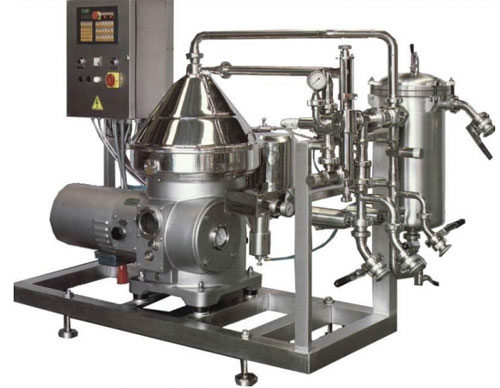
A duplex filter removes coarse particles and shell fragments from the collected water. A disc centrifuge then separates finer suspended solids where greater clarity is required. The selected separation process should reflect the intended appearance and the characteristics of the incoming coconut water.
Optional ultrafiltration (UF) can be included for further clarification. Its effect on appearance and sensory characteristics should be assessed with the actual product. Naturally cloudy and clarified coconut water can both be NFC, provided the water has not been concentrated and reconstituted. Deaeration is available as an optional configuration where additional dissolved-oxygen control is required.
3. Controlled Heat Treatment
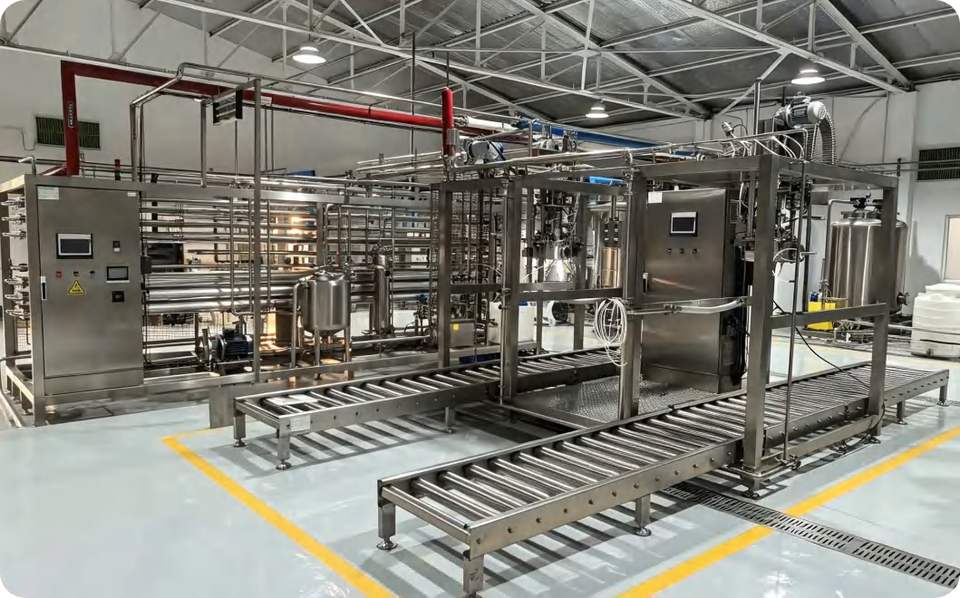
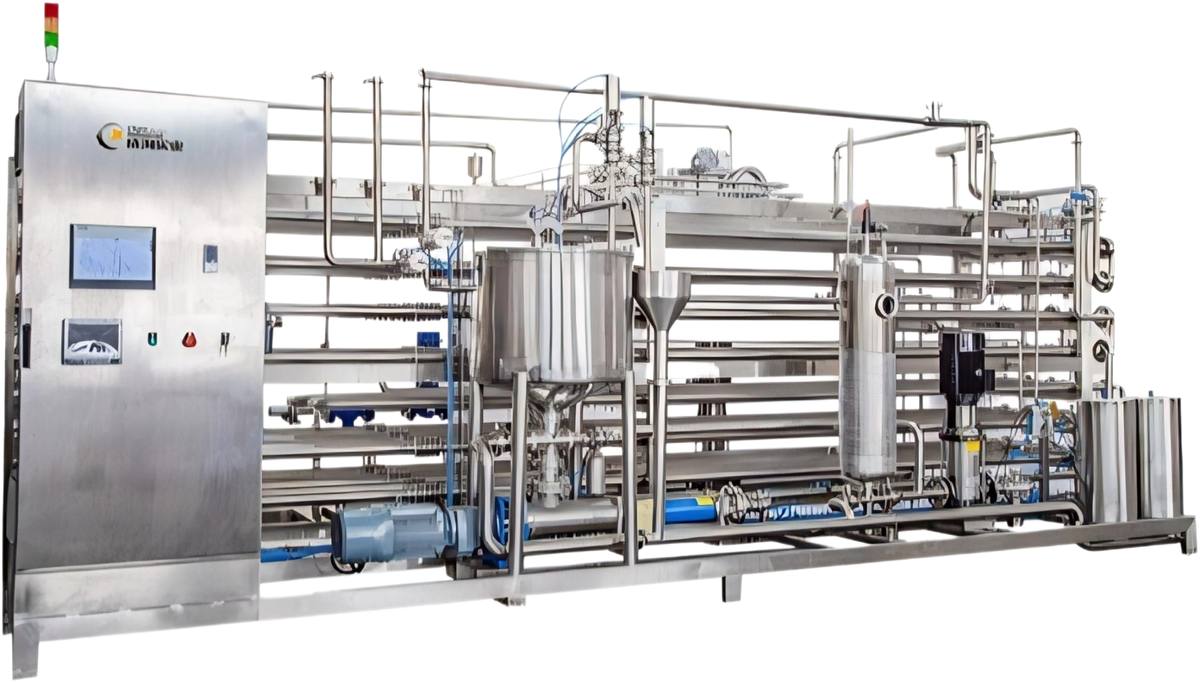
The tubular sterilizer provides a continuous heating, holding, and cooling stage. It is configured for the chosen pasteurization or UHT route, with the operating conditions matched to the product and packaging system. Temperature control and appropriate residence time are used to balance the required microbial treatment with product quality.
For a chilled product, pasteurization is followed by cooling and refrigerated handling. For an ambient product, the UHT section connects to an aseptic downstream system. The choice of route should be established before selecting the filler and planning utilities, piping, and the production area.
4. Filling and Packaging
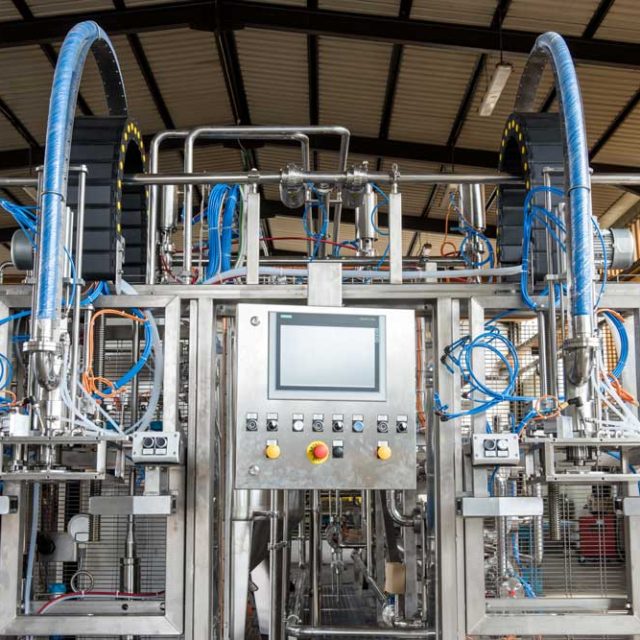
Packaging options include aseptic BIB bags (1L-220L) and bottles. An aseptic bag filling machine can be integrated for the selected bag format, with the filling interface, bag fitment, and upstream sterilization system matched as part of the line configuration.
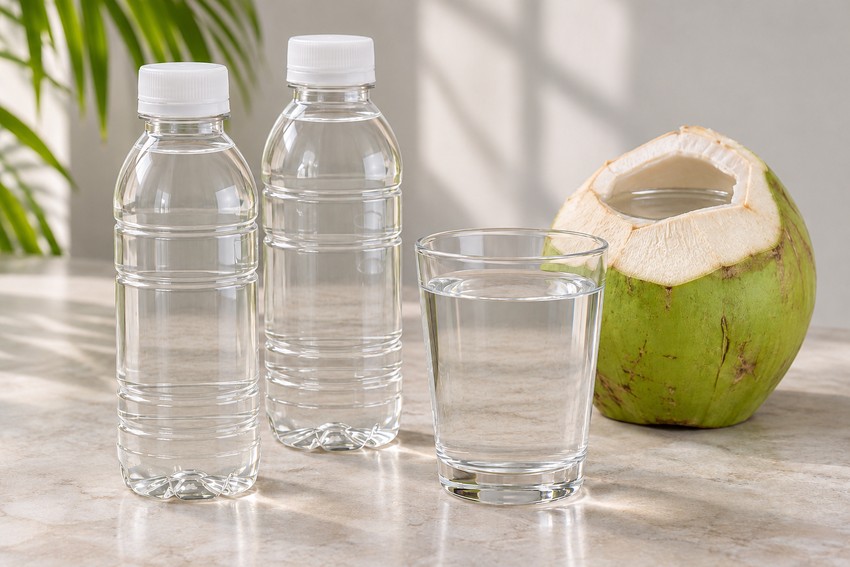
Bottle production requires a filling system suited to the bottle material, closure, and selected processing route. The sterilizer, transfer system, and filler must function together: choosing an aseptic bag or bottle alone does not establish the finished product’s storage conditions. Finished packs are handled according to the agreed chilled or ambient distribution route.
Coconut Water Processing Line Features
Configurable Processing
Washing, extraction, clarification, heat treatment, and packaging are combined around the required product and factory layout.
Choice of Clarity
Separation and optional UF can be selected around the required appearance, with product trials used to assess the result.
Hygienic Construction
Product-contact parts use SUS304 or SUS316L stainless steel. CIP and SIP compatibility is specified for the selected equipment, with cleaning and sterilization circuits coordinated in the final design.
Central Operation
PLC control and an HMI touch screen support monitoring and adjustment of the operating parameters for the configured line.
Coconut Water Processing Plant Projects
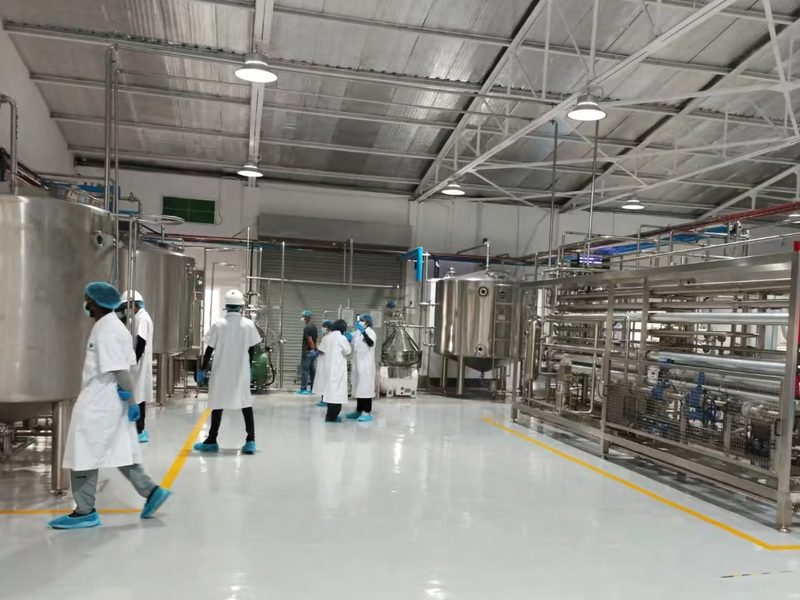
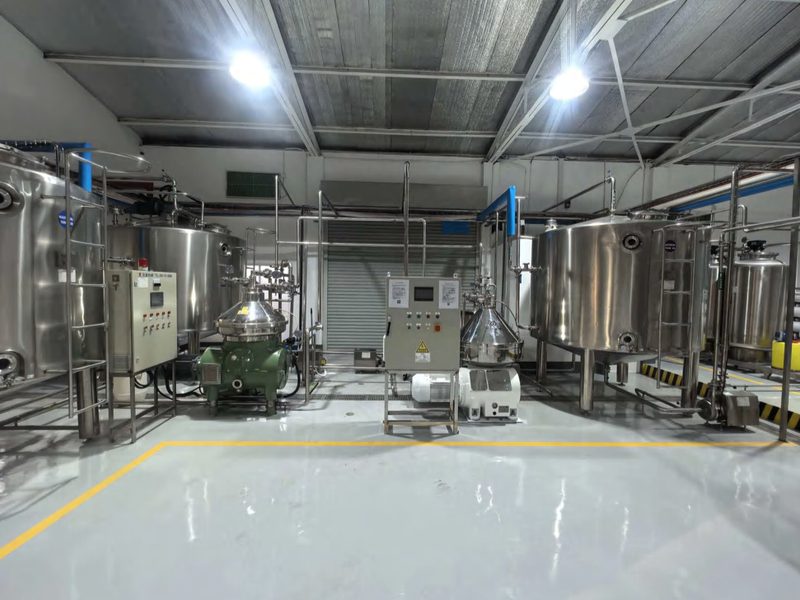
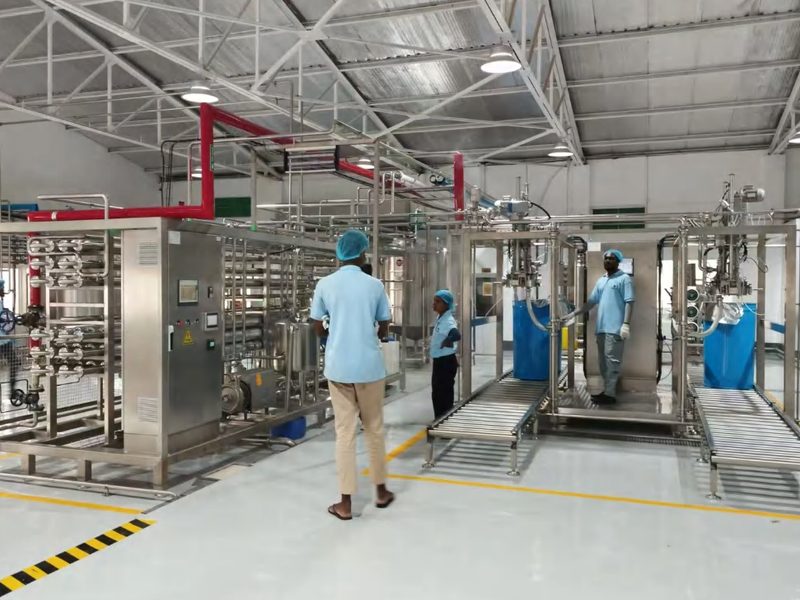
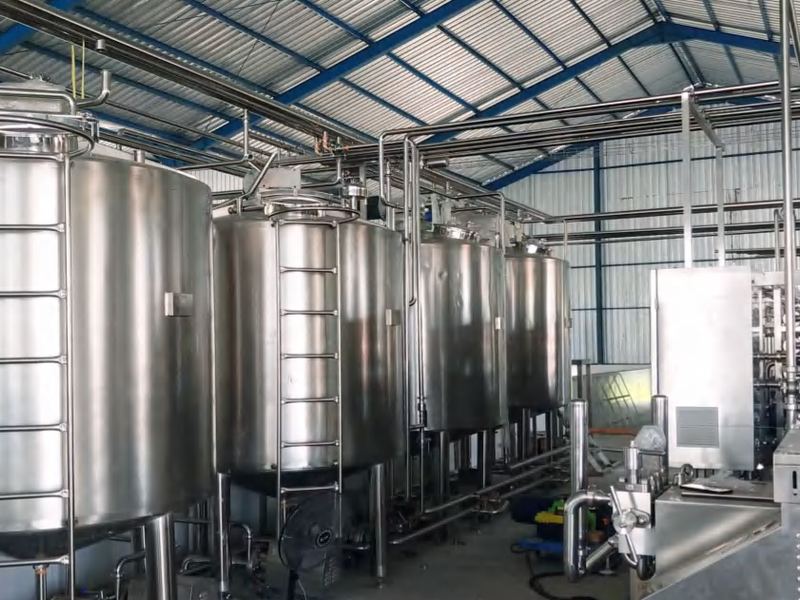
These project photos show stainless steel processing equipment, storage tanks, and production areas from coconut water plant installations.
Discuss Your Coconut Water Plant Project
Coconut Water Processing Line Technical Specifications
| Capacity Range | 1 T/H – 10 T/H (Customizable) |
|---|---|
| Raw Material | Young Green Coconut / Mature Brown Coconut |
| Material (Contact) | SUS304 / SUS316L Stainless Steel |
| Sterilization Type | UHT (Tubular) / Pasteurization |
| Filtration | Duplex Filter + Disc Centrifuge + UF (Optional) |
| Control System | PLC + HMI Touch Screen |
| Cleaning System | CIP / SIP Compatible |
| Packaging Options | Aseptic BIB Bags (1L-220L) / Bottles |
The exact configuration depends on the raw material, required clarity, thermal process, packaging format, and available utilities. The table describes selectable line options; the equipment list and layout are developed for the project.
Get a Line Specification and Layout
Coconut Water Processing Line FAQs
What is the difference between NFC and clear coconut water?
NFC means not from concentrate; it describes the processing history, not the appearance. NFC coconut water may be naturally cloudy or clarified. Clear coconut water has undergone separation or filtration to reduce suspended matter. Clarity alone does not determine shelf life, which also depends on treatment, packaging, and storage.
Can the line process both young and mature coconuts?
Yes. Water from young green coconuts and mature brown coconuts can be processed, although taste and composition vary with variety and maturity. The raw material should suit the intended beverage. Water collected during mature coconut meat processing can also be recovered for further processing. A concentration project requires a separate evaporation stage and is specified as a different process route.
How does the line help control pinking and oxidation?
Deaeration is an optional configuration, selected when the product and process require additional oxygen removal. Hygienic collection, reduced air exposure, prompt transfer, and controlled processing and storage temperatures also help manage quality changes. Color stability depends on the raw material and complete process, so no single machine can guarantee that pinking will never occur.
Can AGICO supply the aseptic BIB filling system and bags?
Yes. AGICO can supply the aseptic bag filler and bags as part of the packaging solution. The selected bag size, fitment, filling head, and process requirements are matched during configuration. The available line packaging options remain aseptic BIB bags (1L-220L) or bottles, using the appropriate filling equipment for the chosen format.
What is the lead time for a complete coconut water line?
For standard configurations, the lead time is approximately 45–60 working days. Custom engineering and large-capacity lines may require additional time. Installation and commissioning support are available.
Plan Your Coconut Water Processing Line
Share the following information with AGICO so the proposal and equipment layout reflect your production requirements:
- Required processing capacity and operating schedule.
- Coconut type, maturity, and how the raw material arrives at the factory.
- Desired product clarity and whether distribution will be chilled or ambient.
- Bag or bottle format, package size, and planned filling arrangement.
- Available floor space, utilities, and any equipment to be integrated.
- Fruit Juice Production Line
- Citrus Juice Processing Line
- Mango juice production line
- Apple Juice Processing Line
- Pineapple Juice Processing Line
- Pomegranate juice processing line
- Lychee juice processing plant
- Grape Juice Processing Line
- Full Automatic Milk Processing Plant
- Plant Protein Beverage Production Line
- Coconut Water Processing Line
- Fruit Crusher Machine
- Tubular Fruit Preheater
- Steam Jacketed Kettle
- Fruit Belt Press Filter
- Spiral Juice Extractor
- Fruit Peeling and Squeezing Machine
- Citrus Fruits Peel Essential Oil Extractor
- Double Screw Extractor for Grape
- Fruit Pulping Machine
- Mango Peeling and Destoning Machine
- Grape Destemmer Crusher
- Automatic Coconut Cutting Machine
- Tender Coconut Half Cutting Machine
- grape wine squeezing machine
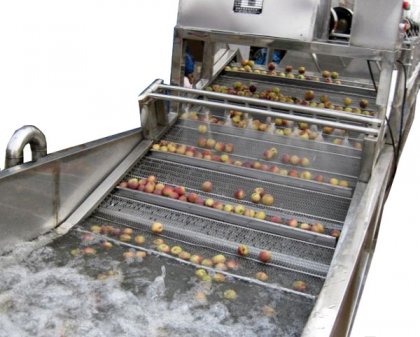

Compare four industrial fruit washing machine types and AGICO bubble washer models. Select by capacity, cleaning action, materials and fruit handling....
Follow six industrial mango juice processing steps, from sorting and pulping to blending, heat treatment, filling and cooling. See equipment choices and figures to confirm....
Compare gravity, pressure, vacuum, flow-meter and weighing juice filling machines. Learn how beverage type, bottle, capacity and cleaning needs guide selection....