
Assessing fruit and vegetable juice processing in China
China has many fruit and vegetable growing regions, but the viability of a juice plant depends on the crop and location. A processor should verify current harvest volumes, grades, season length, transport losses, purchase terms and competing uses for the produce before assuming a continuous raw-material supply. Historical national output figures cannot establish the supply available to one factory today.
Processing can create a sales outlet for suitable produce and may support growers, jobs or by-product use where the economics work. Those outcomes are not automatic. They depend on the price paid to growers, actual juice yield, product demand, energy and water costs, packaging, distribution and waste management. The FAO juice-processing planning guide sets out these linked decisions. AGICO supplies machinery for defined fruit and vegetable juice projects; equipment suitability and scope should be confirmed for the intended product.
Practical considerations for fruit and vegetable processing
Rather than assuming that one country's methods or market conditions apply everywhere, review the following parts of the proposed operation:
- Integrated supply and sales planning. Agree on fruit specifications, delivery periods and quality checks with growers, and compare expected production with realistic customer orders and storage capacity.
- Process and packaging selection. Choose extraction, separation, concentration, treatment and filling steps for the actual beverage. Validate food-safety controls and intended shelf life; a newer machine or faster line alone does not prove a safer or better product.
- Product range and changeovers. Juice, puree, blends and concentrates may need different equipment and packages. Evaluate cleaning, changeover time and the yield of each proposed product before adding complexity. Contact AGICO with the product and capacity requirements for an equipment discussion.
- By-product use. Peel, pulp and seeds require a handling plan. Depending on fruit type and local outlets, some residues may have value; citrus peel oil, for example, can be recovered with a suitable citrus peel essential-oil extractor. The FAO citrus-processing guide describes such streams. Test yields, quality and the business case before investing.
- Quality and compliance. Document raw-material inspection, sanitation, process monitoring, packaging checks and applicable food rules for the markets served. A quality-system certificate should be claimed only for the specific business and scope that actually hold it.
- Fruit Juice Production Line
- Citrus Juice Processing Line
- Mango juice production line
- Apple Juice Processing Line
- Pineapple Juice Processing Line
- Pomegranate juice processing line
- Lychee juice processing plant
- Grape Juice Processing Line
- Full Automatic Milk Processing Plant
- Plant Protein Beverage Production Line
- Coconut Water Processing Line
- Industrial Coconut Milk Processing Line and Extraction Equipment
- Fruit Crusher Machine
- Tubular Fruit Preheater
- Steam Jacketed Kettle
- Fruit Belt Press Filter
- Spiral Juice Extractor
- Fruit Peeling and Squeezing Machine
- Citrus Fruits Peel Essential Oil Extractor
- Double Screw Extractor for Grape
- Fruit Pulping Machine
- Mango Peeling and Destoning Machine
- Grape Destemmer Crusher
- Automatic Coconut Cutting Machine
- Tender Coconut Half Cutting Machine
- grape wine squeezing machine
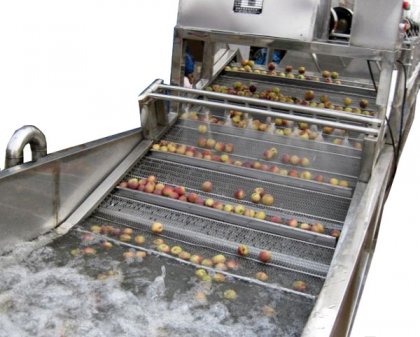

Compare four industrial fruit washing machine types and AGICO bubble washer models. Select by capacity, cleaning action, materials and fruit handling....
Follow six industrial mango juice processing steps, from sorting and pulping to blending, heat treatment, filling and cooling. See equipment choices and figures to confirm....
Compare gravity, pressure, vacuum, flow-meter and weighing juice filling machines. Learn how beverage type, bottle, capacity and cleaning needs guide selection....