
Fruit and vegetable juices are sold as clear products or intentionally cloudy drinks. In a clear juice, unexpected haze or sediment may be a defect; in a cloudy juice, some suspended pulp is part of the product, but a separated layer can still be undesirable. The cause should be identified before choosing filtration, homogenization or another control, because the right treatment differs for each product.
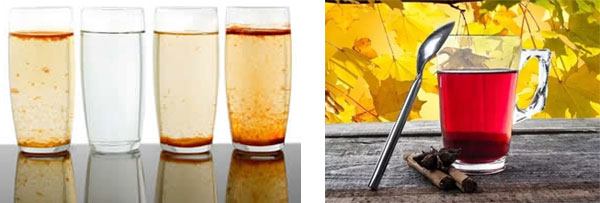
Causes of Juice Sediment and Cloudiness
Unexpected Haze or Sediment in Clear Juice
- Microbial growth: Inadequate process control or contamination after treatment can change appearance and may signal a food-safety problem. Investigate the batch rather than treating visible sediment as a cosmetic issue.
- Incomplete clarification or filtration: Remaining pulp, pectin, protein or other suspended solids may form haze or settle during storage.
- Water and mineral interactions: Water composition and minerals can interact with juice components and change stability; test the actual blending water and finished product.
- Ingredient interactions: Sweeteners, processing aids or other ingredients may contribute to haze if their quality or compatibility has not been verified.
Pulp Separation in Cloudy Juice
- Enzyme activity can change pectin and the viscosity that helps keep fine particles suspended; its effect depends on the fruit and process.
- Changes in acidity, mineral balance or formulation can affect the stability of suspended particles.
- Microbial growth can alter the product and must be assessed as a safety issue, not simply a stability issue.
- Protein, tannin or other ingredients may interact and form particles in some formulations.
- Large or uneven pulp particles can settle when particle size and liquid viscosity are not matched to the desired shelf life.
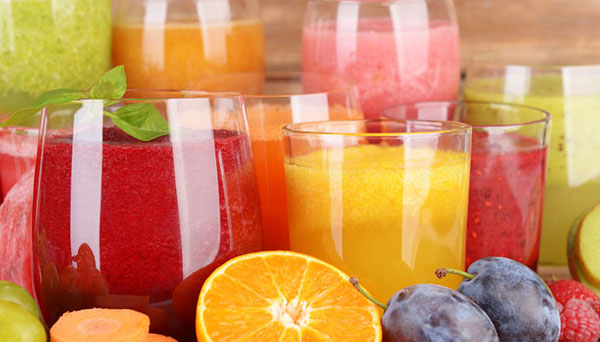
How to Control Juice Sediment in Production
First define whether the target is a clear juice or a stable cloudy beverage. The FAO fruit-juice processing guide describes settling, centrifugation and filtration for clear products, while cloudy products may need different particle-size and enzyme controls. Investigate both appearance and microbiological safety through plant trials and shelf-life testing.
- Check process water. Test water quality, mineral content, pH and conductivity against the recipe and applicable standards. Reverse osmosis can be considered when required; it is not mandatory for every juice.
- Choose clarification for the intended product. For clear juice, evaluate suitable enzyme treatment, settling, centrifugation or filtration. Gelatin, tannin and filter aids require food-grade suitability, label review and trials. The older article cited about 90°C, cooling to 50°C, 40minutes of pectinase holding and 84.6kPa vacuum filtration. These are historical examples, not universal or validated operating settings; determine actual conditions from the juice and equipment.
- Control cloudy-juice particle size. Homogenization or a suitable mill can help disperse pulp when appropriate. The older claim of particles below 0.002 millimeters is not a general requirement or guaranteed outcome; confirm the target distribution and stability by testing.
- Validate food-safety treatment and filling. Select heat treatment, hygienic filling and package controls for the actual juice and distribution plan. Visible clarity does not establish microbial safety. The FDA Juice HACCP guide states that pasteurization times and temperatures depend on the juice and process.
To plan equipment for the required fruit, appearance and package, review the fruit and vegetable juice production line and provide a sample or target specification for process review.
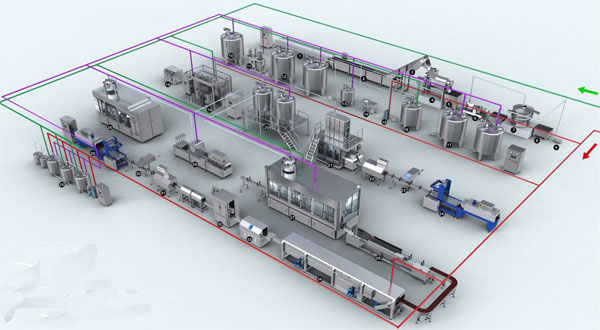
- Fruit Juice Production Line
- Citrus Juice Processing Line
- Mango juice production line
- Apple Juice Processing Line
- Pineapple Juice Processing Line
- Pomegranate juice processing line
- Lychee juice processing plant
- Grape Juice Processing Line
- Full Automatic Milk Processing Plant
- Plant Protein Beverage Production Line
- Coconut Water Processing Line
- Industrial Coconut Milk Processing Line and Extraction Equipment
- Fruit Crusher Machine
- Tubular Fruit Preheater
- Steam Jacketed Kettle
- Fruit Belt Press Filter
- Spiral Juice Extractor
- Fruit Peeling and Squeezing Machine
- Citrus Fruits Peel Essential Oil Extractor
- Double Screw Extractor for Grape
- Fruit Pulping Machine
- Mango Peeling and Destoning Machine
- Grape Destemmer Crusher
- Automatic Coconut Cutting Machine
- Tender Coconut Half Cutting Machine
- grape wine squeezing machine
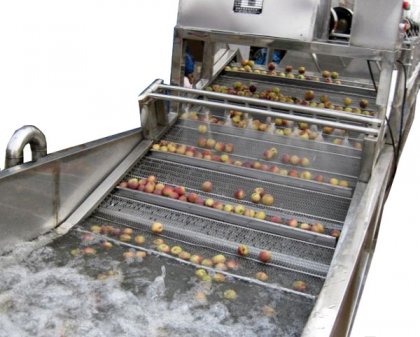

Compare four industrial fruit washing machine types and AGICO bubble washer models. Select by capacity, cleaning action, materials and fruit handling....
Follow six industrial mango juice processing steps, from sorting and pulping to blending, heat treatment, filling and cooling. See equipment choices and figures to confirm....
Compare gravity, pressure, vacuum, flow-meter and weighing juice filling machines. Learn how beverage type, bottle, capacity and cleaning needs guide selection....