
Fruit bruising can result from impact, compression and abrasion during harvesting, sorting, washing, packing and transport. Damage may be hidden beneath the skin yet still reduce raw-material quality and storage life. Gentle handling should be planned across the whole route into the processing plant, not left to one machine. The FAO post-harvest handling guide identifies drops, unsuitable containers, overpacking and careless transport as common causes.
How to Reduce Fruit Bruising at Each Handling Stage
Review each transfer point from harvest to storage. Record where bruising appears, then adjust the specific drop height, speed, support surface or packing method responsible. The right settings depend on fruit firmness, ripeness and the equipment used.
Fruit Harvest and Field Handling
Train harvest workers to place fruit gently into clean, suitable containers rather than drop or throw it. Avoid sharp edges and overfilled boxes, use padding where appropriate and secure containers during movement. Handle long or sharp stems according to the fruit and packing method. Fruit rejected for serious damage should be separated before processing.
Fruit Sorting and Washing
Choose a fruit sorting machine and conveyor layout suited to the fruit's skin and firmness. Set transfer heights and belt speeds to limit impact, then verify the result with representative fruit. A machine suitable for firm citrus is not automatically suitable for more bruise-sensitive fruit.
Common Sources of Fruit Damage During Sorting
- Using guides, rollers or settings designed for a different fruit size or firmness.
- Excessive height differences or mismatched speeds between an elevator and conveyor.
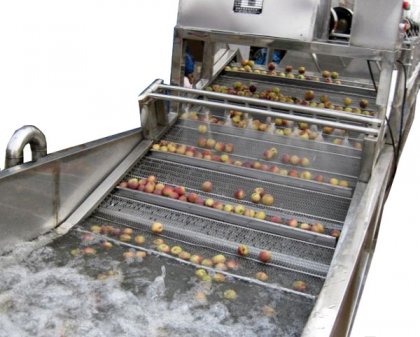
- Loading fruit too rapidly into a fruit washing machine or allowing fruit to strike hard surfaces.
Practical Sorting and Washing Controls
- Use suitable manual handling for fruit that cannot be processed gently by the available sorter; keep gloves and contact surfaces clean.
- Reduce drop heights and cushion transfer points where appropriate; coordinate conveyor speeds and check the fruit after each transfer.
- Control the rate of fruit entry into wash water. Test a water-assisted transfer only when it suits the fruit, water quality and line hygiene plan.
Fruit Packaging and Box Selection
- Select containers with sufficient strength, clean surfaces and no exposed sharp edges; appearance and logos do not protect fruit from bruising.
- Prevent both overpacking, which compresses fruit, and underpacking, which allows fruit to move and rub during transport.
- Use trays, dividers or suitable cushioning for delicate or irregular fruit. Packaging must match the fruit and destination.
- The previous article suggested a box weight between 5 and 15kg for manual handling. Treat that as a historical example; choose the actual load from fruit protection, worker handling and applicable transport requirements.

Fruit Storage and Transportation
- Limit stack height to what the boxes and fruit can safely bear, and check the bottom layer for crushing or moisture damage.
- Secure loads so boxes do not slide or shift, and keep loading and unloading movements gentle.
- Do not step on packed fruit. Recheck bruise rates after transport and use the findings to improve container design or handling.
- Fruit Juice Production Line
- Citrus Juice Processing Line
- Mango juice production line
- Apple Juice Processing Line
- Pineapple Juice Processing Line
- Pomegranate juice processing line
- Lychee juice processing plant
- Grape Juice Processing Line
- Full Automatic Milk Processing Plant
- Plant Protein Beverage Production Line
- Coconut Water Processing Line
- Industrial Coconut Milk Processing Line and Extraction Equipment
- Fruit Crusher Machine
- Tubular Fruit Preheater
- Steam Jacketed Kettle
- Fruit Belt Press Filter
- Spiral Juice Extractor
- Fruit Peeling and Squeezing Machine
- Citrus Fruits Peel Essential Oil Extractor
- Double Screw Extractor for Grape
- Fruit Pulping Machine
- Mango Peeling and Destoning Machine
- Grape Destemmer Crusher
- Automatic Coconut Cutting Machine
- Tender Coconut Half Cutting Machine
- grape wine squeezing machine

Compare four industrial fruit washing machine types and AGICO bubble washer models. Select by capacity, cleaning action, materials and fruit handling....
Follow six industrial mango juice processing steps, from sorting and pulping to blending, heat treatment, filling and cooling. See equipment choices and figures to confirm....
Compare gravity, pressure, vacuum, flow-meter and weighing juice filling machines. Learn how beverage type, bottle, capacity and cleaning needs guide selection....