
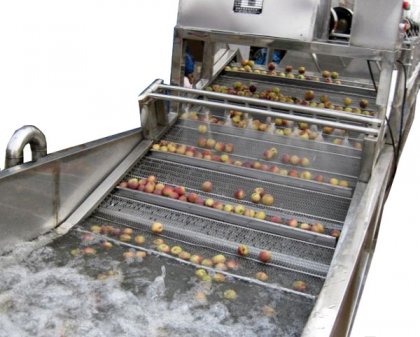
A fruit washer helps remove soil and debris from fruit and vegetables before further processing. Washing alone does not guarantee removal of all microbes or pesticide residues. Choose the appropriate fruit processing machinery for the material and process. The supplied bubble washing machine and any brush or spray options should be assessed against the ordered configuration and fruit-handling requirements.
The necessity of fruit washer maintenance
Inspecting and cleaning a washer can help keep its water circulation, drives and product-contact areas in suitable condition. Use the installed model's manual and the plant's sanitation schedule to set inspection intervals. Before reaching into a chain, belt or guarded area, stop the equipment and apply the site's hazardous-energy isolation procedure when unexpected startup or stored energy could expose staff to injury.
Chain adjustment
Authorized personnel should inspect chain wear, alignment and tension using the method and limits in the machine manual. Do not press an exposed chain with fingers merely because the motor has stopped. Isolate and verify the energy state before maintenance, then restore guards before restarting.
Transmission maintenance
Check the gearbox for leaks, abnormal noise and lubricant level at the specified interval. Use the grade and fill procedure stated by the manufacturer. Shut down, isolate and verify all relevant energy sources before opening an inspection point or servicing the drive. Follow the site's spill and food-contact contamination controls.
Belt adjustment
Check belt condition, tracking and tension against the installed model's specification. A 7–12 mm deflection is not a universal setting. Keep hands away from moving parts and use trained personnel and suitable tools for adjustment.
Preservation of a long-idle fruit washer
Clean and dry the equipment according to the manual before storage. Remove residue from accessible areas after safe isolation, and protect belts, chains and exposed metal as specified for their materials. Before the next run, inspect wear, reconnect services, restore guards and complete the plant's sanitation check.
The function of ozone in fruit washing machines
Some washers may include an ozone system for treating wash water. Confirm whether this option is actually supplied, permitted for the intended food and market, and operated within validated conditions. Ozone can help control microbial build-up in wash water, but the result depends on concentration, contact time, water quality and produce surface. It is not a blanket guarantee of sterilization or removal of pesticide residues, hormones or heavy metals. See the FDA produce-wash guidance and the OSHA hazardous-energy guidance for relevant safety principles.
- Validate any claimed microbial reduction for the actual produce, water and operating conditions.
- Monitor the ozone system and worker exposure as required by the equipment instructions and local rules.
- Do not infer longer shelf life or removal of specific chemical contaminants without product-specific test evidence.
- Fruit Juice Production Line
- Citrus Juice Processing Line
- Mango juice production line
- Apple Juice Processing Line
- Pineapple Juice Processing Line
- Pomegranate juice processing line
- Lychee juice processing plant
- Grape Juice Processing Line
- Full Automatic Milk Processing Plant
- Plant Protein Beverage Production Line
- Coconut Water Processing Line
- Industrial Coconut Milk Processing Line and Extraction Equipment
- Fruit Crusher Machine
- Tubular Fruit Preheater
- Steam Jacketed Kettle
- Fruit Belt Press Filter
- Spiral Juice Extractor
- Fruit Peeling and Squeezing Machine
- Citrus Fruits Peel Essential Oil Extractor
- Double Screw Extractor for Grape
- Fruit Pulping Machine
- Mango Peeling and Destoning Machine
- Grape Destemmer Crusher
- Automatic Coconut Cutting Machine
- Tender Coconut Half Cutting Machine
- grape wine squeezing machine

Compare four industrial fruit washing machine types and AGICO bubble washer models. Select by capacity, cleaning action, materials and fruit handling....
Follow six industrial mango juice processing steps, from sorting and pulping to blending, heat treatment, filling and cooling. See equipment choices and figures to confirm....
Compare gravity, pressure, vacuum, flow-meter and weighing juice filling machines. Learn how beverage type, bottle, capacity and cleaning needs guide selection....