
Fruit Washing Machine Functions in Juice Processing
A fruit washing machine prepares incoming fruit for subsequent sorting, crushing and extraction in a fruit juice processing line. Depending on the fruit and machine design, water movement, sprays or brushes can remove loose soil, leaves and other surface debris. The equipment is a pretreatment stage, not a guarantee that the finished juice is safe.

- Remove visible debris: washing and rinsing can reduce dirt and loose material on the fruit surface.
- Reduce some surface contamination: the effect depends on fruit condition, water quality, contact time and maintenance. Washing does not sterilize produce or eliminate all bacteria.
- Support consistent downstream handling: controlled feed, rinsing and discharge help the next sorting or extraction stage.
Why Washing Is Necessary, and What It Cannot Guarantee
Fruit arrives with varying amounts of soil, field material and surface residues. A suitable washer helps manage those inputs, but it cannot promise to remove all pesticide residues, heavy metals or microorganisms. The U.S. EPA notes that washing cannot remove every pesticide residue; the FDA likewise says washing reduces but does not eliminate bacteria. Juice safety also depends on raw-material selection, sanitation and the subsequent validated process.

Where a Fruit Cleaning Machine Can Be Used
Different washer designs suit different materials. Bubble or water-tank systems may suit some delicate fruits; brush-and-spray systems may suit firmer produce. The fruit's shape, skin strength, soil load and desired capacity determine the practical configuration. Claims for mushrooms, seafood, defrosting, ozone or ultraviolet treatment require a specific model and process review; they are not standard functions of every fruit washer. Any wash-water sanitizer must be approved for the intended use and controlled according to applicable instructions.

Fruit Washer Structure and Workflow
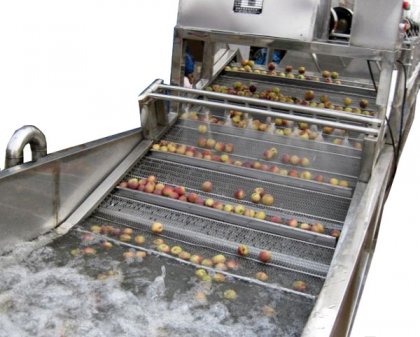
A typical water-tank configuration can include a tank, circulation pump, conveyor or elevator, spray-rinse zone and discharge. Fruit enters the wash zone, moves through controlled water flow, is rinsed and leaves for the next process. Recirculated water needs filtration, replacement and sanitation controls to limit cross-contamination. Brush, spray and bubble machines differ, so confirm the actual layout and material-contact parts for the model offered.

For a suitable machine recommendation, share the fruit varieties, size range, expected soil load and required throughput. These details help compare a washer with the rest of the juice line without overstating what washing alone can accomplish.
- Fruit Juice Production Line
- Citrus Juice Processing Line
- Mango juice production line
- Apple Juice Processing Line
- Pineapple Juice Processing Line
- Pomegranate juice processing line
- Lychee juice processing plant
- Grape Juice Processing Line
- Full Automatic Milk Processing Plant
- Plant Protein Beverage Production Line
- Coconut Water Processing Line
- Industrial Coconut Milk Processing Line and Extraction Equipment
- Fruit Crusher Machine
- Tubular Fruit Preheater
- Steam Jacketed Kettle
- Fruit Belt Press Filter
- Spiral Juice Extractor
- Fruit Peeling and Squeezing Machine
- Citrus Fruits Peel Essential Oil Extractor
- Double Screw Extractor for Grape
- Fruit Pulping Machine
- Mango Peeling and Destoning Machine
- Grape Destemmer Crusher
- Automatic Coconut Cutting Machine
- Tender Coconut Half Cutting Machine
- grape wine squeezing machine

Compare four industrial fruit washing machine types and AGICO bubble washer models. Select by capacity, cleaning action, materials and fruit handling....
Follow six industrial mango juice processing steps, from sorting and pulping to blending, heat treatment, filling and cooling. See equipment choices and figures to confirm....
Compare gravity, pressure, vacuum, flow-meter and weighing juice filling machines. Learn how beverage type, bottle, capacity and cleaning needs guide selection....