
What Affects Fruit Juice Quality During Production?
Fruit juice quality changes from raw-fruit reception through extraction, treatment, filling, storage and transport. Raw material condition, enzyme activity, oxygen exposure, microorganisms and physical instability can affect color, flavor, clarity and shelf life. Control points should be selected for the specific fruit and finished product.
Fruit Quality and Raw-Material Handling
Sort out rotten or visibly damaged fruit and remove foreign matter. Wash sound fruit with water of suitable sanitary quality before processing. Sorting and washing reduce contamination but do not replace a validated control for hazards in the juice.
Crushing, pressing, extraction and pulping expose fruit tissue to air and enzymes. Some fruits or products use a heat or enzyme-treatment step, but preheating is not a universal requirement before crushing. Select the sequence according to the fruit, target juice style and validated process. A fruit juice production line can combine sorting, extraction and downstream treatment for the required product.
Keep incoming fruit under conditions appropriate to the crop and process it promptly to limit deterioration before extraction.

Enzymatic and Chemical Changes in Fruit Juice
Enzymatic Browning
Three enzyme groups often discussed in fruit-juice quality are:
- Polyphenol oxidase, which can oxidize fruit phenolic compounds and contribute to browning after tissue damage.
- Ascorbic acid oxidase, which can contribute to vitamin C loss when oxygen is available.
- Peroxidase, whose activity can also affect quality in some fruit systems.
Once fruit tissue is crushed, enzyme activity and oxygen exposure may accelerate color changes. The importance of each reaction varies by fruit and process.

Non-Enzymatic Browning
Non-enzymatic browning includes Maillard-type reactions involving reducing sugars and amino compounds, as well as other reactions involving ascorbic acid. Excessive heat or long storage can change juice color and flavor.
Three practical controls to assess are:
- Control processing and storage temperature and residence time.
- Limit oxygen exposure where the product and equipment allow.
- Use only permitted ingredients or treatments when justified by the formulation and local regulations; sulfites are not a universal solution.
Aroma Changes
Fruit aroma may change during cutting, extraction, heating, oxygen exposure and storage. Evaluate the process using the actual fruit and the desired fresh or processed flavor profile.
Microbial Control in Juice Processing
Microbial growth can cause spoilage and may create a food-safety hazard. The control plan should cover incoming fruit, hygienic equipment, the selected juice treatment and filling conditions:
- Reject rotten or moldy raw fruit and keep sorting records where required.
- Wash fruit with suitable water and maintain cleaning and sanitation procedures for equipment, pipes and contact surfaces.
- Validate the juice treatment for the product and relevant hazards; washing fruit alone does not make juice sterile.
- Use suitable, correctly sealed packaging and storage conditions after treatment.
High sugar concentration can inhibit some microorganisms in certain formulations, but sugar addition must not be treated as a substitute for an appropriate juice safety process.
Cloudiness and Sediment in Clear and Cloudy Juice
Clear juice should meet its target clarity, while cloudy juice should retain the intended uniform appearance. Haze, sediment or layer separation may appear during storage if clarification or cloud-stability controls are unsuitable.

For clear juice, assess pectin and starch breakdown, protein stability, clarification, filtration, oxidation and microbiological condition rather than assuming a single cause.
For cloudy juice, particle size, pulp level, pectin, protein, pH and formulation influence physical stability. The appropriate target depends on the juice and its expected storage conditions.
Settling can be reduced through suitable particle-size control and formulation, but it cannot generally be guaranteed to reach zero. Test the finished product over its intended shelf life.
How to Prevent Quality Loss in Fruit Juice Production
Control enzymes with a product-specific process. Heat treatment may inactivate enzymes, but its time and temperature must be chosen for the fruit, target flavor and validated safety plan.
Limit unnecessary oxygen contact from crushing through filling. Enclosed transfer, shorter holding times, deaeration or suitable inert-gas practices may help where appropriate; complete oxygen exclusion is not assumed.
- Minimize delays between extraction, treatment and filling.
- Choose packaging and filling conditions that protect the juice after processing.
- Use permitted antioxidants only when suitable for the formulation and market.
- Monitor dissolved oxygen, color and sensory quality where relevant.
For apple and other fruits, the effect of controlled oxidation on flavor depends on cultivar and product style. Confirm any intended aroma benefit through trials instead of applying one rule to all juices.
Prevent metal contamination. Use suitable food-contact equipment and monitor cleaning, maintenance and water quality. Copper and other reactive metals can accelerate oxidation and vitamin C loss.

- Fruit Juice Production Line
- Citrus Juice Processing Line
- Mango juice production line
- Apple Juice Processing Line
- Pineapple Juice Processing Line
- Pomegranate juice processing line
- Lychee juice processing plant
- Grape Juice Processing Line
- Full Automatic Milk Processing Plant
- Plant Protein Beverage Production Line
- Coconut Water Processing Line
- Industrial Coconut Milk Processing Line and Extraction Equipment
- Fruit Crusher Machine
- Tubular Fruit Preheater
- Steam Jacketed Kettle
- Fruit Belt Press Filter
- Spiral Juice Extractor
- Fruit Peeling and Squeezing Machine
- Citrus Fruits Peel Essential Oil Extractor
- Double Screw Extractor for Grape
- Fruit Pulping Machine
- Mango Peeling and Destoning Machine
- Grape Destemmer Crusher
- Automatic Coconut Cutting Machine
- Tender Coconut Half Cutting Machine
- grape wine squeezing machine
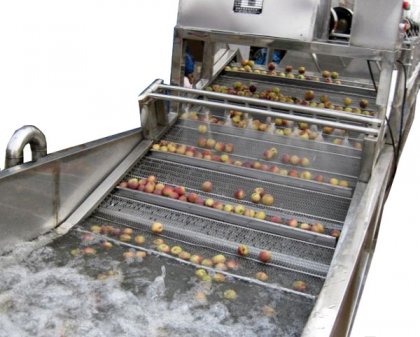

Compare four industrial fruit washing machine types and AGICO bubble washer models. Select by capacity, cleaning action, materials and fruit handling....
Follow six industrial mango juice processing steps, from sorting and pulping to blending, heat treatment, filling and cooling. See equipment choices and figures to confirm....
Compare gravity, pressure, vacuum, flow-meter and weighing juice filling machines. Learn how beverage type, bottle, capacity and cleaning needs guide selection....