
How to plan fruit juice production technology?
Juice production starts with the intended fruit, product specification, package and storage conditions. Fresh fruit and reconstituted concentrate can support different products, but neither choice guarantees quality by itself. Manufacturers should define raw-material checks, extraction, treatment, filling and shelf-life verification for the actual juice.

Selection of fruit raw materials
Choose fruit or concentrate against a written specification for identity, maturity, flavor, soluble solids, acidity and safety. Inspect each lot and trace its source. When the drink is intended to contain pulp, extraction, screening, homogenization and formulation should be tested for the desired texture and acceptable settling; complete elimination of settling is not a universal target.
Choose and validate the treatment method
Heating can change flavor and some heat-sensitive nutrients, but avoiding heat is not a general food-safety rule. Pasteurization and other validated treatments, including high-pressure processing in suitable products, may be considered according to the juice, hazards, package and market. The selected process must achieve its required safety outcome and be checked for quality and shelf life; high-pressure treatment is not mandatory for every juice.

Consider vitamin C and oxidation
Vitamin C content can change during cutting, extraction, treatment and storage. Managing oxygen exposure and processing time may help protect color and flavor. If ascorbic acid is added, the amount should come from formulation trials, applicable ingredient rules and label requirements. A fixed 1/10000 addition does not guarantee color stability or replace a validated safety process.
Set flavor ingredients by formulation
Some beverages use added flavor, while others rely on the fruit alone. Choose any flavor or passion-fruit blend by sensory testing, product specification and the labeling rules of the sales market. Half of a supplier's suggested flavor dosage, a fixed 2%–4% passion-fruit addition and a universal temperature limit are not reliable instructions for every recipe. Confirm how the chosen blend behaves during treatment and storage.
Control acidity and pH for the actual product
Measure pH and titratable acidity for each formulation because they affect taste and process design in different ways. A target of 0.4%–0.6% acidity or pH 3.7–3.9 cannot be applied to all fruit juices. Pasteurization settings and any shelf-stable claim require product-specific validation, appropriate packaging and controls beyond a single pH reading.
Evaluate pulp stability and soluble solids
Measure soluble solids in °Brix and set a target for the actual juice or beverage; no single 10–120 °Brix range describes ordinary finished juice. For drinks with suspended pulp, particle size, viscosity, homogenization and storage conditions influence settling. A permitted stabilizer may be useful in some formulations, but its type and dose should be tested rather than assumed necessary for every product.
- Fruit Juice Production Line
- Citrus Juice Processing Line
- Mango juice production line
- Apple Juice Processing Line
- Pineapple Juice Processing Line
- Pomegranate juice processing line
- Lychee juice processing plant
- Grape Juice Processing Line
- Full Automatic Milk Processing Plant
- Plant Protein Beverage Production Line
- Coconut Water Processing Line
- Industrial Coconut Milk Processing Line and Extraction Equipment
- Fruit Crusher Machine
- Tubular Fruit Preheater
- Steam Jacketed Kettle
- Fruit Belt Press Filter
- Spiral Juice Extractor
- Fruit Peeling and Squeezing Machine
- Citrus Fruits Peel Essential Oil Extractor
- Double Screw Extractor for Grape
- Fruit Pulping Machine
- Mango Peeling and Destoning Machine
- Grape Destemmer Crusher
- Automatic Coconut Cutting Machine
- Tender Coconut Half Cutting Machine
- grape wine squeezing machine
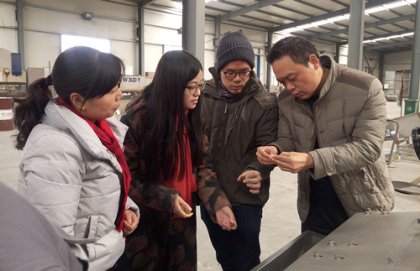
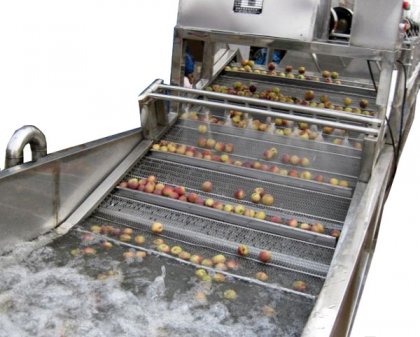

Compare four industrial fruit washing machine types and AGICO bubble washer models. Select by capacity, cleaning action, materials and fruit handling....
Follow six industrial mango juice processing steps, from sorting and pulping to blending, heat treatment, filling and cooling. See equipment choices and figures to confirm....
Compare gravity, pressure, vacuum, flow-meter and weighing juice filling machines. Learn how beverage type, bottle, capacity and cleaning needs guide selection....